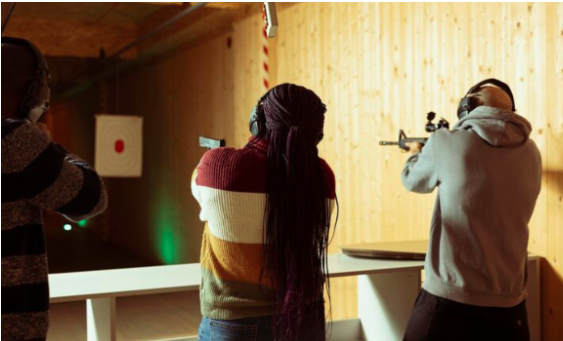

Choosing to carry a firearm for personal protection is a significant decision that carries both immense responsibility and potential legal consequences. While many focus on the hardware—the firearm and the holster—the most critical component of self-defense is the proficiency of the individual.
Engaging in professional concealed carry training is not just a legal formality in many jurisdictions; it is a foundational step in ensuring safety, competence, and peace of mind.
Mastery of Firearm Fundamentals
The primary benefit of formal instruction is the development of consistent, safe gun-handling skills. Professional instructors focus on the four rules of firearm safety until they become second nature.
Beyond safety, training ensures that you understand the mechanics of your specific weapon, including how to clear malfunctions, perform efficient reloads, and maintain accuracy under pressure. Without this foundation, a firearm can become a liability rather than an asset during a high-stress encounter.
Understanding the Legal Landscape
Carrying a weapon involves navigating a complex web of laws regarding the use of deadly force. A core component of concealed carry training involves educating students on where they can legally carry and, more importantly, the specific criteria that must be met before pulling a trigger.
Understanding concepts like disparity of force and the castle doctrine helps ensure that if you ever have to defend yourself, you do so within the bounds of the law, potentially saving you from life-altering legal battles.
Development of Situational Awareness
The best way to win a fight is to avoid it entirely. Quality training emphasizes situational awareness—the art of scanning your environment and identifying potential threats before they escalate. Instructors teach students how to recognize pre-attack indicators and how to maintain a state of relaxed alertness.
This proactive mindset often allows a permit holder to de-escalate a situation or exit an area before a firearm ever needs to become part of the equation.
Psychological Preparedness and Stress Management
The physiological response to a life-threatening situation—often called fight or flight—can degrade fine motor skills and cloud judgment. Through drills and simulated scenarios, concealed carry training exposes individuals to controlled levels of stress.
This helps inoculate the shooter against panic, allowing them to rely on muscle memory and clear thinking. Learning to control your breathing and focus your mind is as important as learning to aim.
Tactical Proficiency and Drawing Techniques
Carrying a concealed weapon adds the challenge of the draw. In a real-world scenario, you must be able to clear your clothing and present your firearm quickly and safely. Training provides a structured environment to practice these movements.
Instructors help students optimize their holster position and garment choices, ensuring that the transition from concealed to ready is seamless. This tactical edge is often the deciding factor in a defensive encounter.
Promoting a Culture of Responsibility
Finally, pursuing concealed carry training reinforces the gravity of carrying a lethal weapon. It fosters a culture of discipline and respect for human life.
When citizens are well-trained, they are less likely to make impulsive mistakes and more likely to act as responsible protectors of themselves and their families. Ultimately, training transforms a mere gun owner into a prepared, ethical, and capable defender.