Travellers and food writers alike have recognised Indore as being among the very best places to sample the vast array of street food to be found throughout India. The city has a density and consistency of good street food that is genuinely unusual, not just in terms of variety but in terms of quality maintained across decades. This is not a place where one or two famous dishes carry the reputation. There is a long history of street food in Indore that goes well beyond simply eating.
I made plans to visit Indore with a two-day agenda that would allow for strictly consuming food and nothing else. I was not interested in visiting any museums, monuments, or performing tourist activities. My sole focus was to explore the streets of Indore and its various street food vendors and sample how seriously the city takes its street food culture compared to the many cities in which I had previously visited.
Why Indore Eats the Way It Does
The city sits in the Malwa region of Madhya Pradesh, and its food reflects a geography that sits between the wheat-growing north and the pulse-heavy cooking of central India. The influence of Marwari traders, Gujarati communities, and local Malwi tradition has produced a street food culture that does not fit neatly into any single regional category. Sweet and savoury appear together in ways that might seem unusual until you taste them. Fried things arrive alongside fermented ones. The combinations that sound odd on paper work completely in practice.
Indore also has a culture of eating at specific times of day, and understanding that rhythm matters if you want to eat well. Mornings belong to certain stalls, evenings to others, and showing up at the wrong hour means missing the thing you came for.
Chappan Dukaan: The Starting Point
Most food itineraries in Indore begin at Chappan Dukaan, which translates literally as fifty-six shops. The name comes from the original number of food stalls that opened along this stretch in the New Palasia area, and while the count has shifted over the years, the concentration of eating options remains extraordinary. I arrived here on my first evening and stayed for nearly three hours, moving between stalls with no real plan.
The garadu here is the thing to start with. These are deep-fried yam pieces, crisp on the outside and soft inside, seasoned with spices and a squeeze of lemon. They are available in the winter months specifically, and the version at Chappan Dukaan is the benchmark. Bhutte ka kees, a preparation of grated corn cooked with spices and milk, is another dish that originates in this region and is worth seeking out while you are here.
Sarafa Bazaar After Dark
Sarafa Bazaar is a jewellery market during the day. After around nine in the evening, it transforms into what is arguably the most concentrated street food market in the city. The jewellery shops pull down their shutters and the food stalls set up in the same space, which creates an atmosphere that is unlike any other food market I have visited.
The dahi phulki here is outstanding. Soft, hollow puris filled with spiced yoghurt and finished with chutneys and sev; it is the kind of dish that is simple in description and difficult to stop eating in practice. Malpua, a sweet fried pancake soaked in sugar syrup and served with rabdi, appears at several stalls along the bazaar and is worth trying at least once, even if you are not particularly drawn to sweets.
I spent two evenings at Sarafa and covered a different section each time. One evening is not enough to do it properly.
The Morning Routine
Poha and jalebi in the morning is so embedded in Indore’s food culture that it functions almost as a civic ritual. The poha here is lighter and more finely spiced than versions you find elsewhere, topped with sev, pomegranate seeds, and fresh coriander. Paired with a hot jalebi straight from the oil, it makes for a breakfast that justifies waking up early.
The stalls around Johri Gali and the older parts of the city near Rajwada are particularly good for this combination in the morning hours.
Planning the Trip Around Food
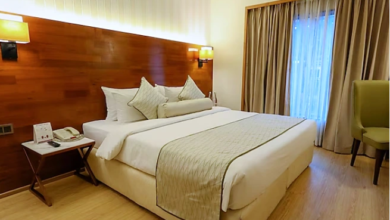
Staying centrally makes the food itinerary considerably easier to manage. There are hotels in Indore near the main food areas that put Sarafa Bazaar and Chappan Dukaan within easy reach, which matters when you are moving between locations across different parts of the day and evening.
Two days is the minimum I would recommend for anyone serious about the food here. Three is better. The city is compact enough that you are never far from the next meal, which is both the joy and the danger of spending time here.
Indore does not ask you to work hard to eat well. It just asks that you show up hungry and stay curious.